
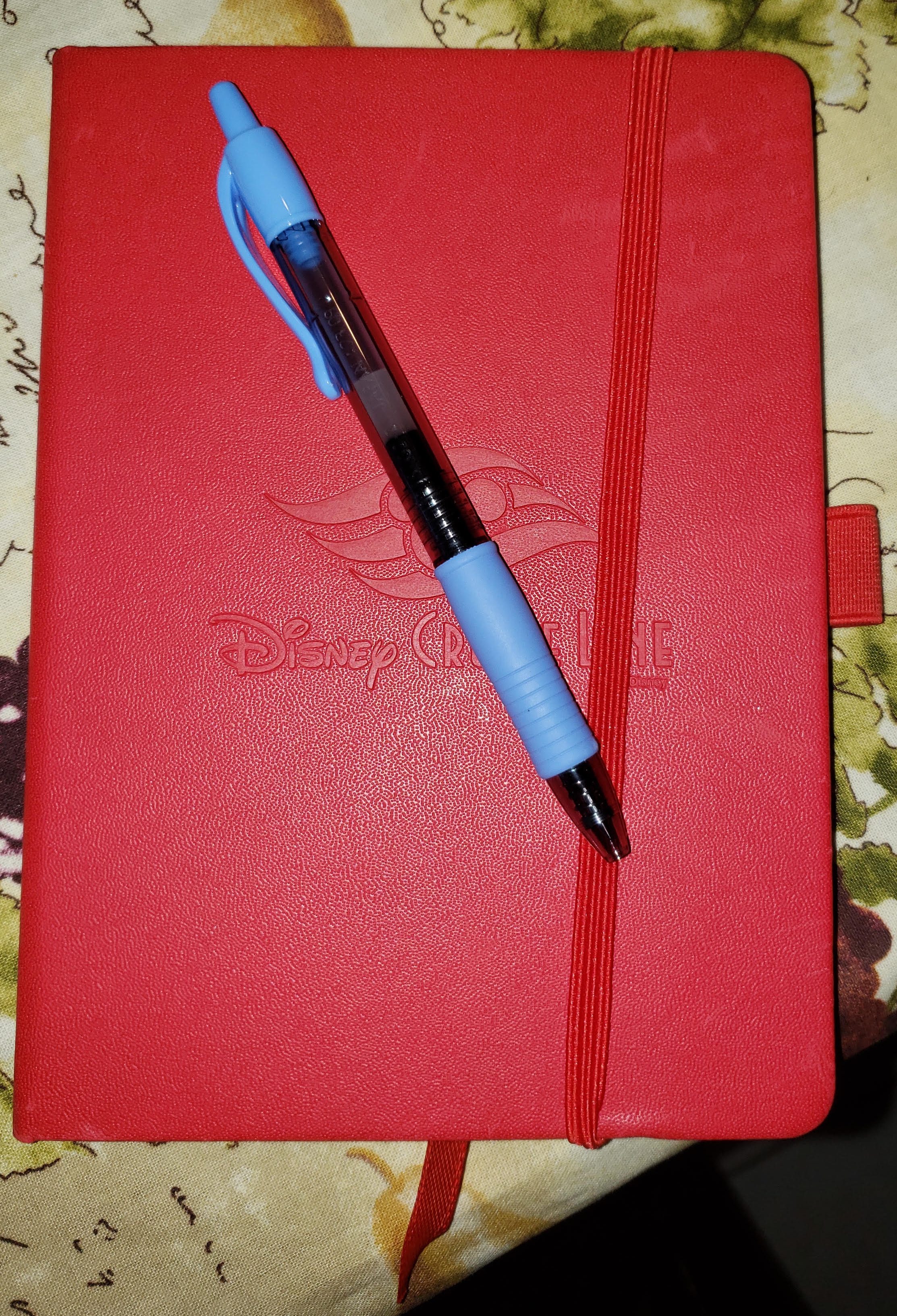
A couple of entries ago in this series, I wrote about coming across notebooks and journals and said that I would eventually figure out what to do with the journals. The answer came to me quicker than I thought it would. I was cleaning up and went to put something in the nightstand when I saw the pile of them–eight books of varying sizes. Some were bound with nice paper. Four of them were small, red-covered journals with the Disney Cruise Line logo that we’d won at bar trivia. And I’ve stuck to my rule of not buying a new one until I have used all of the old ones.
I knew I was going to get rid of them. Sure, they are some “chronicle of my history”, but my recent history is ordinary and nobody has time for or cares to know all about that. You don’t journal for other people anyway. Still, I thought there might be something there, so I decided to skim through them and pull out any pages worth keeping. Then I’d 86 all of them up until the beginning of last year.
And with that a new rule: Keep two years’ worth of journals and that’s it.
The earliest dates in these journals were actually from 2013. I’d started it as a journal about teaching. At that time, I was in one of the worst years of my teaching career. Day to day, I felt as if I was doing everything wrong. I was burned out and also angry, carrying a massive chip on my shoulder into the classroom. I can’t say why I stopped writing about it–probably because I was spinning my wheels and it only made me feel worse. By the time I picked up journaling again, it was 2018 and not only had I survived that year, I’d moved to a different school district and was in a place I didn’t dread driving to every day.
But the depression was still there. The anxiety lingered. The panic attacks started. And so did therapy.
It’s baffling and yet not surprising that I spent a good portion of those early days of therapy justifying my need for therapy. I’d literally wrote that I didn’t think I’d “earned” mental health issues the right to therapy because of my privileges in life. And I also beat myself up for the past. A lot.
So much of those journals were just day-to-day concerns or frustrations with world issues. During the pandemic, I journaled every day and labeled each one as “Quarantine Day #”. Even that was mundane and beating myself up for even writing about what I was feeling. After all, me having to mask up to go find toilet paper was nothing compared to what other people were going through. By then, however, I saw the falsehood in that and also found empathy with colleagues and friends who were also trying to make sense of everything.
Somehow, I did. We all did. And I kept going, wondering if I was improving myself at all, then realizing as I was re-reading the entries that I have. It’s humbling to look at how you thought about yourself when you went to work with your mental health on your back. It’s worrying that I was able to function and part of that functioning involved ignoring my anxiety and depression or even outright hating it. It’s encouraging to see what I believed in myself then as opposed to now and feel a sense of accomplishment.
I wish I could say that there were massive insights found in these pages. I tore a number of them out and saved them because I had done some self-help journaling that went into more detail than, say, what I did at work the day before, but there was no single “A-ha!” moment. Just a chronicle of my late thirties and forties where change was not measured by milestones but with miles tread.

